
Promoting Ethical AI in Earthquake Response
Crisis-affected communities want a say in how AI is used by humanitarians.
Read the full writeup
Artificial intelligence holds massive potential for the humanitarian sector, but due to the sensitive nature of the work, also comes with great risk if things go wrong.
All the humanitarians we spoke to agreed that practical guidance was desperately needed, and also that getting the input from communities on the ground was a crucial part of getting AI implementation right in the sector.
As Product Design Lead, I worked with both humanitarians and earthquake survivors to explore a new concept of AI assurance. A concept that brings community voices into the design of AI tools being used in crisis response, as well as equipping humanitarians with the tools they need to responsibly use AI in the field.
my role
Product Design Lead at Nesta:
I was the sole designer on this project covering:
- User research
- Workshop facilitation
- Product design
- Prototyping
- Service design

Research & testing activities
Concept Research:
I spoke to 32 participants from humanitarian organisations, donors, and tech companies through 1:1 interviews, focus groups, and participatory workshops. I used low-fidelity prototypes and a semi-structured discussion guide to assess desirability, feasibility, and viability of the idea.
Experience Testing with earthquake survivors:
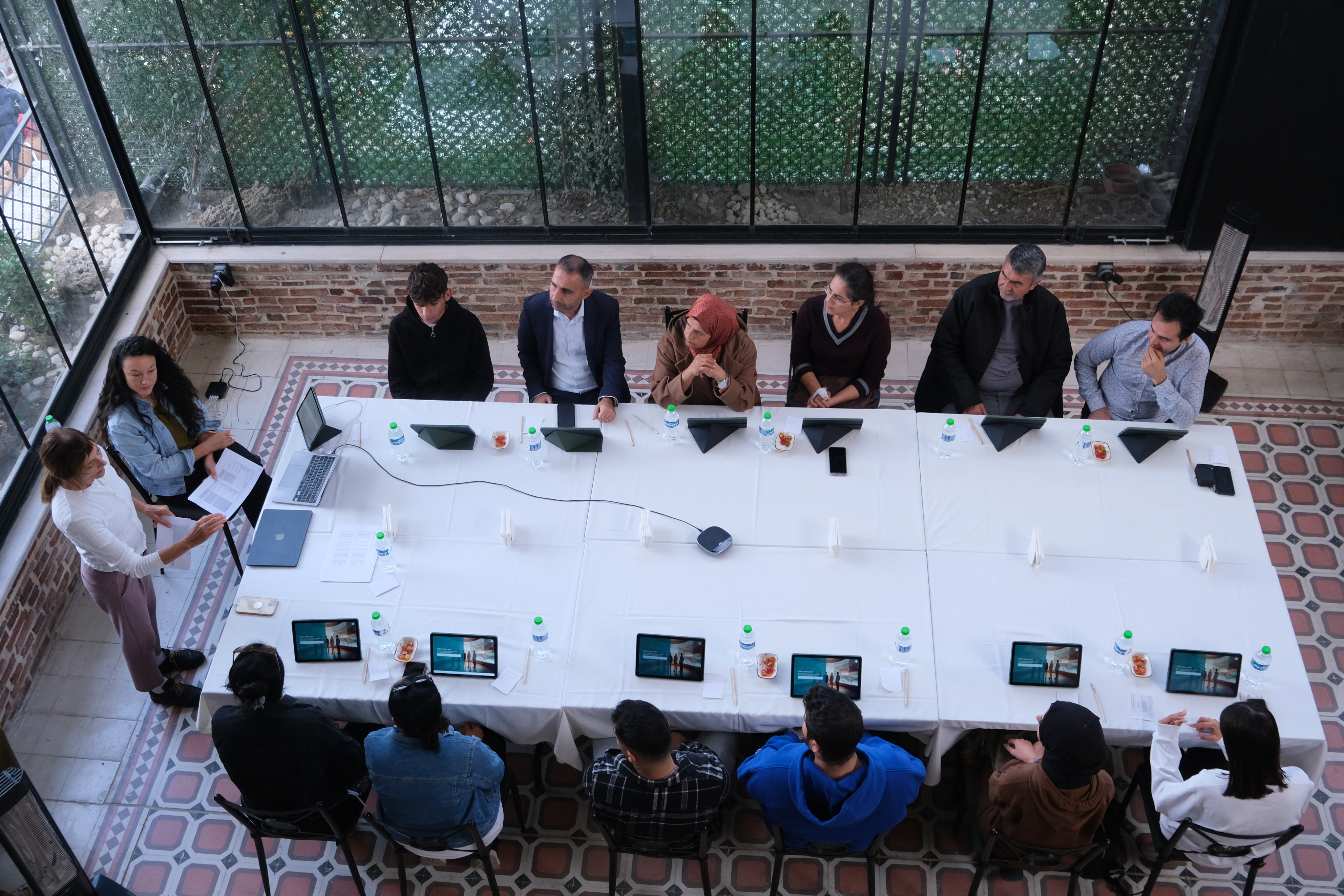
I designed 2 deliberative workshops with 24 local residents of Antakya, Türkiye (12 per session) which was delivered through a local facilitator in the local language. I used deliberative polling as the main research method, along with expert Q&A, and interactive media to gather feedback on their views on AI in earthquake response.
Concept Testing with humanitarians:
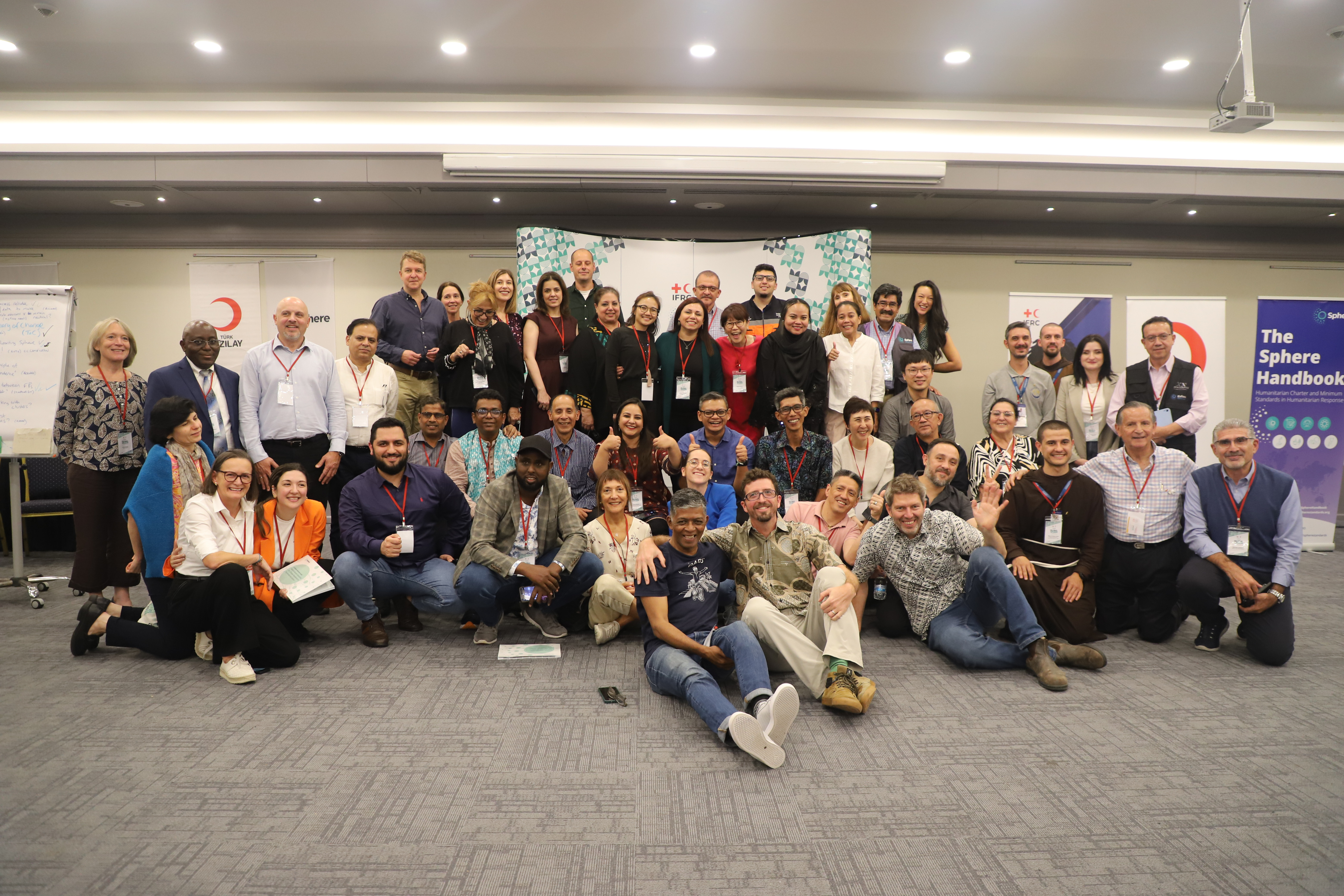
Along with the Principle Researcher I ran an interactive design workshop in Antalya, Türkiye to develop the concept further. It was challenging as it had to be in multiple languages, but we managed to gather practical feedback from 54 participants from all over the globe.


Concept Testing with humanitarians
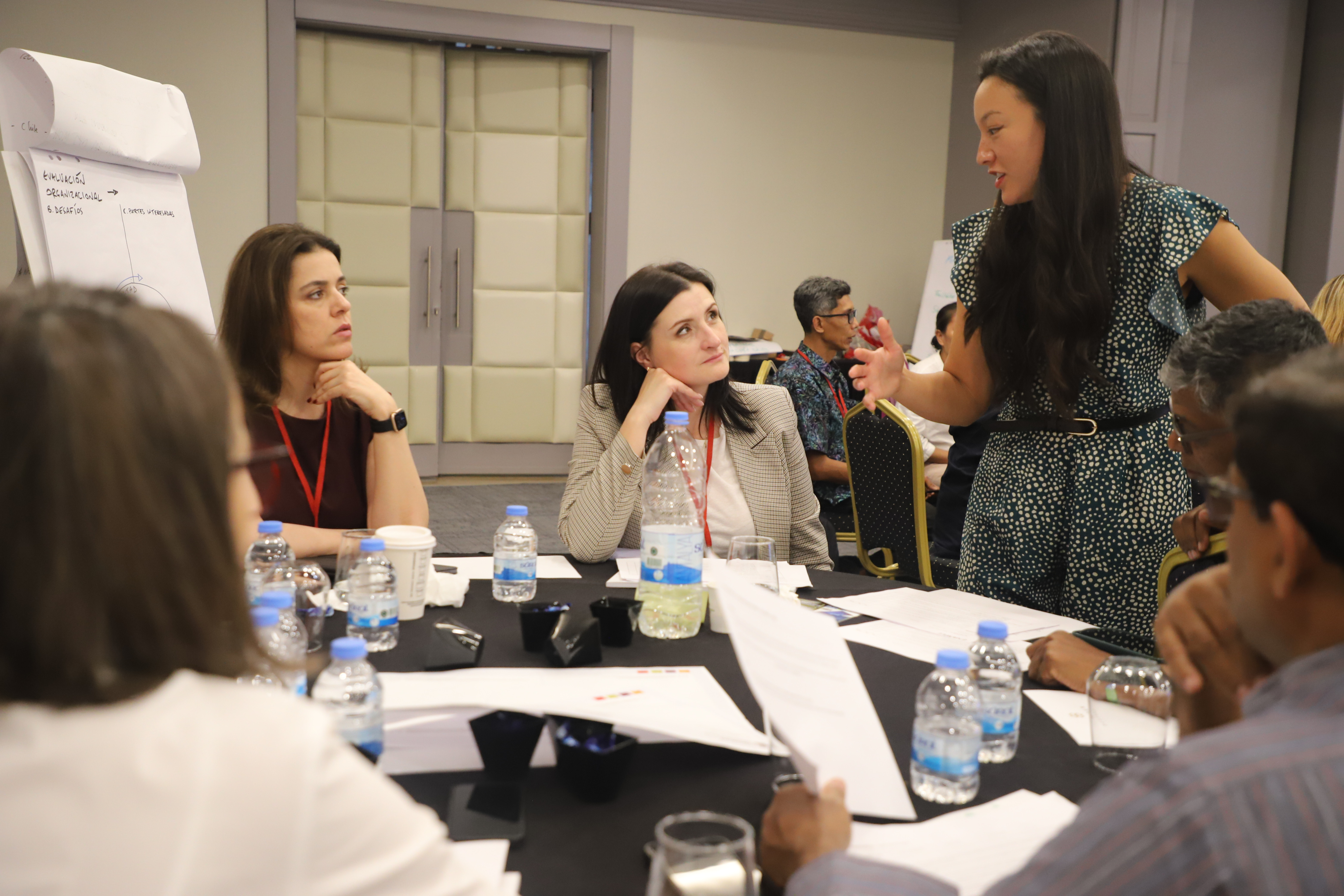
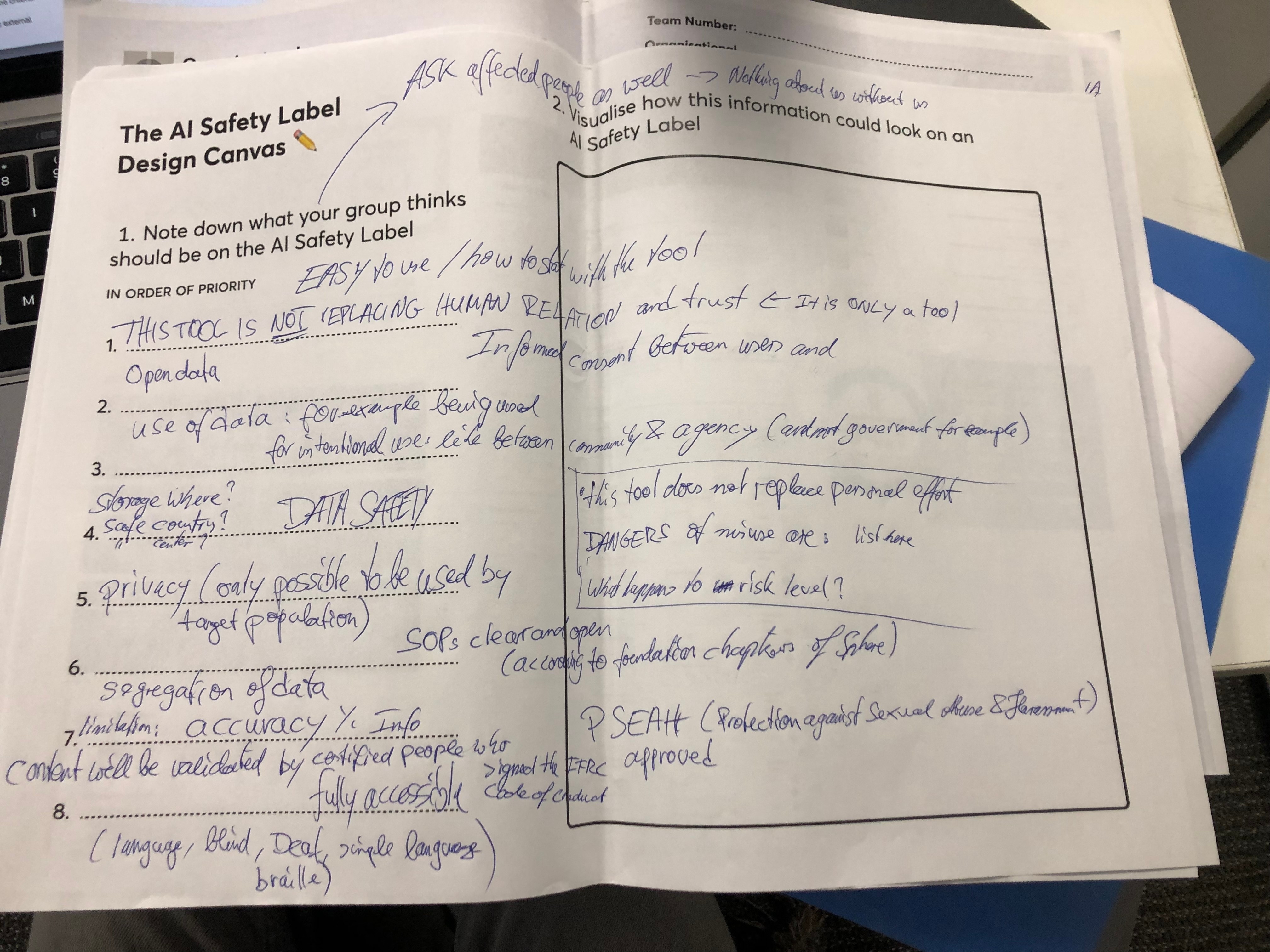
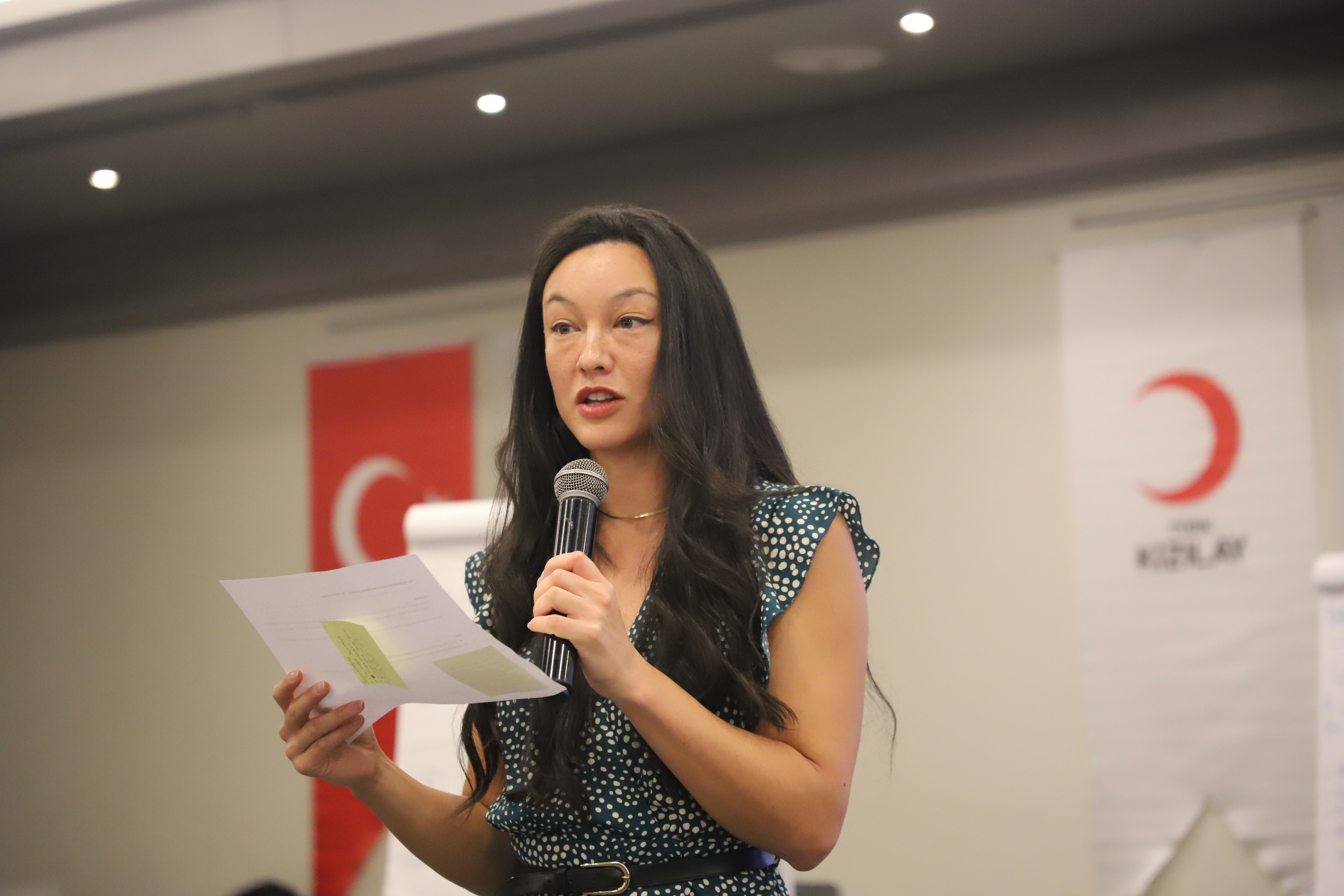
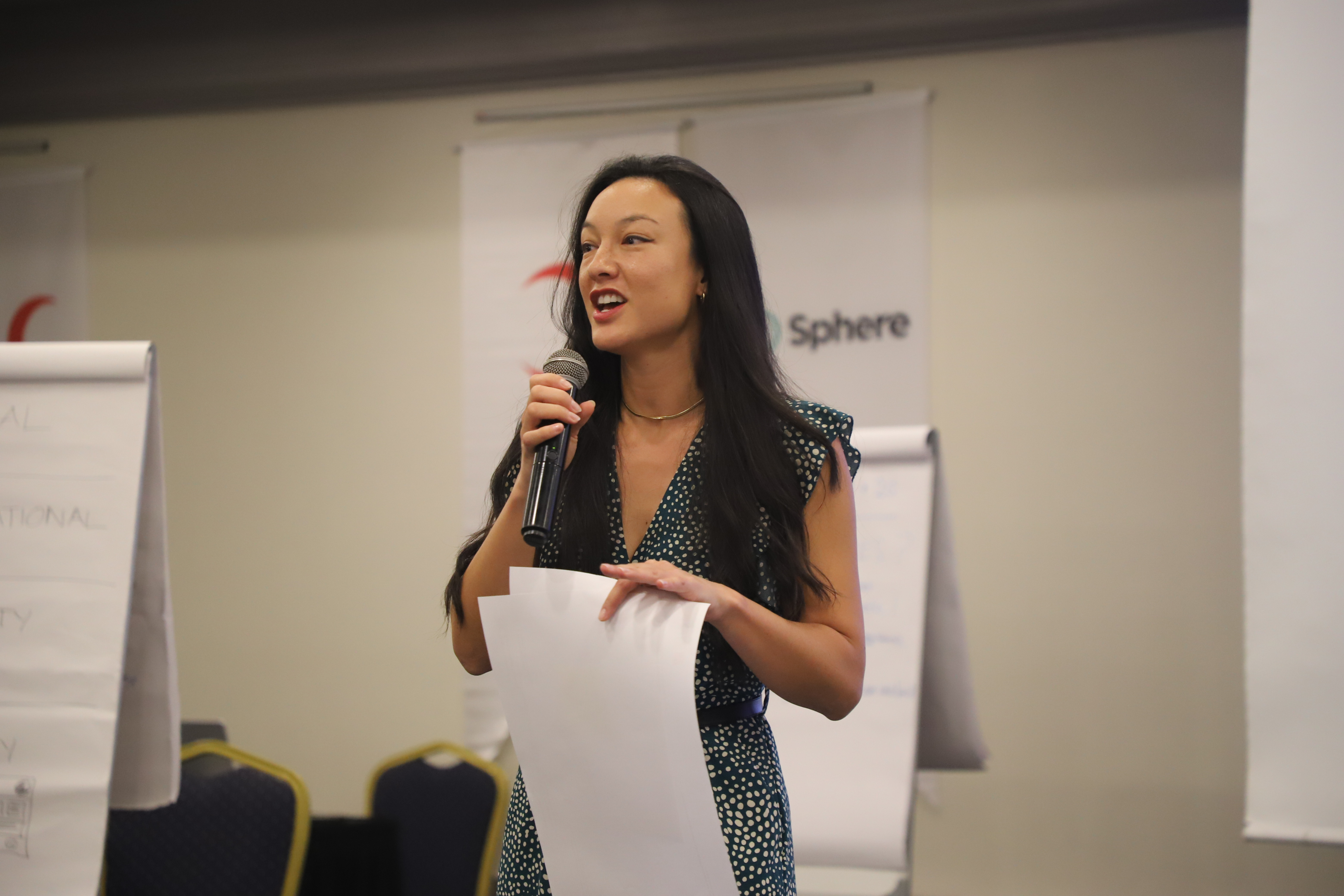
(Top-left) Me facilitating the design workshop with humanitarian staff. (Top-right) The design canvas I used as one of the session materials to stimulate thinking. (Bottom-left) Me 👋 explaining the instructions at the beginning of the workshop. (Bottom-right) A group picture with the 54 participants of the design workshop.
Experience Testing with earthquake survivors
(Top) 12 earthquake survivors participate in a deliberative workshop. (Bottom-left) Shots of the product I designed to deliver the workshop (all materials translated into Turkish). (Bottom-right) A warmup activity at the beginning of the session.
Participant feedback
(Translated from Turkish) “I am only educated to primary school level, and as this kind of ordinary person I've never had the chance to learn what AI is. And now after this workshop I understand it, and I know how to explain it to others."
Project wrap-up video 🎉 FYI I did not make this video! However I was involved in creating the art direction, and then signing off the script, storyboards, and final output.
Next Case Study

Promoting Ethical AI in Earthquake Response
Crisis-affected communities want a say in how AI is used by humanitarians.
Read the full writeup
Artificial intelligence holds massive potential for the humanitarian sector, but due to the sensitive nature of the work, also comes with great risk if things go wrong.
All the humanitarians we spoke to agreed that practical guidance was desperately needed, and also that getting the input from communities on the ground was a crucial part of getting AI implementation right in the sector.
As Product Design Lead, I worked with both humanitarians and earthquake survivors to explore a new concept of AI assurance. A concept that brings community voices into the design of AI tools being used in crisis response, as well as equipping humanitarians with the tools they need to responsibly use AI in the field.
my role
Product Design Lead at Nesta:
I was the sole designer on this project covering:
- User research
- Workshop facilitation
- Product design
- Prototyping
- Service design

1.
3.
2.
Research & testing activities
Concept Research:
I spoke to 32 participants from humanitarian organisations, donors, and tech companies through 1:1 interviews, focus groups, and participatory workshops. I used low-fidelity prototypes and a semi-structured discussion guide to assess desirability, feasibility, and viability of the idea.
Experience Testing with earthquake survivors:
I designed 2 deliberative workshops with 24 local residents of Antakya, Türkiye (12 per session) which was delivered through a local facilitator in the local language. I used deliberative polling as the main research method, along with expert Q&A, and interactive media to gather feedback on their views on AI in earthquake response.
Concept Testing with humanitarians:
Along with the Principle Researcher I ran an interactive design workshop in Antalya, Türkiye to develop the concept further. It was challenging as it had to be in multiple languages, but we managed to gather practical feedback from 54 participants from all over the globe.


Concept Testing with humanitarians
(Top-left) Me facilitating the design workshop with humanitarian staff. (Top-right) The design canvas I used as one of the session materials to stimulate thinking. (Bottom-left) Me 👋 explaining the instructions at the beginning of the workshop. (Bottom-right) A group picture with the 54 participants of the design workshop.
Experience Testing with earthquake survivors
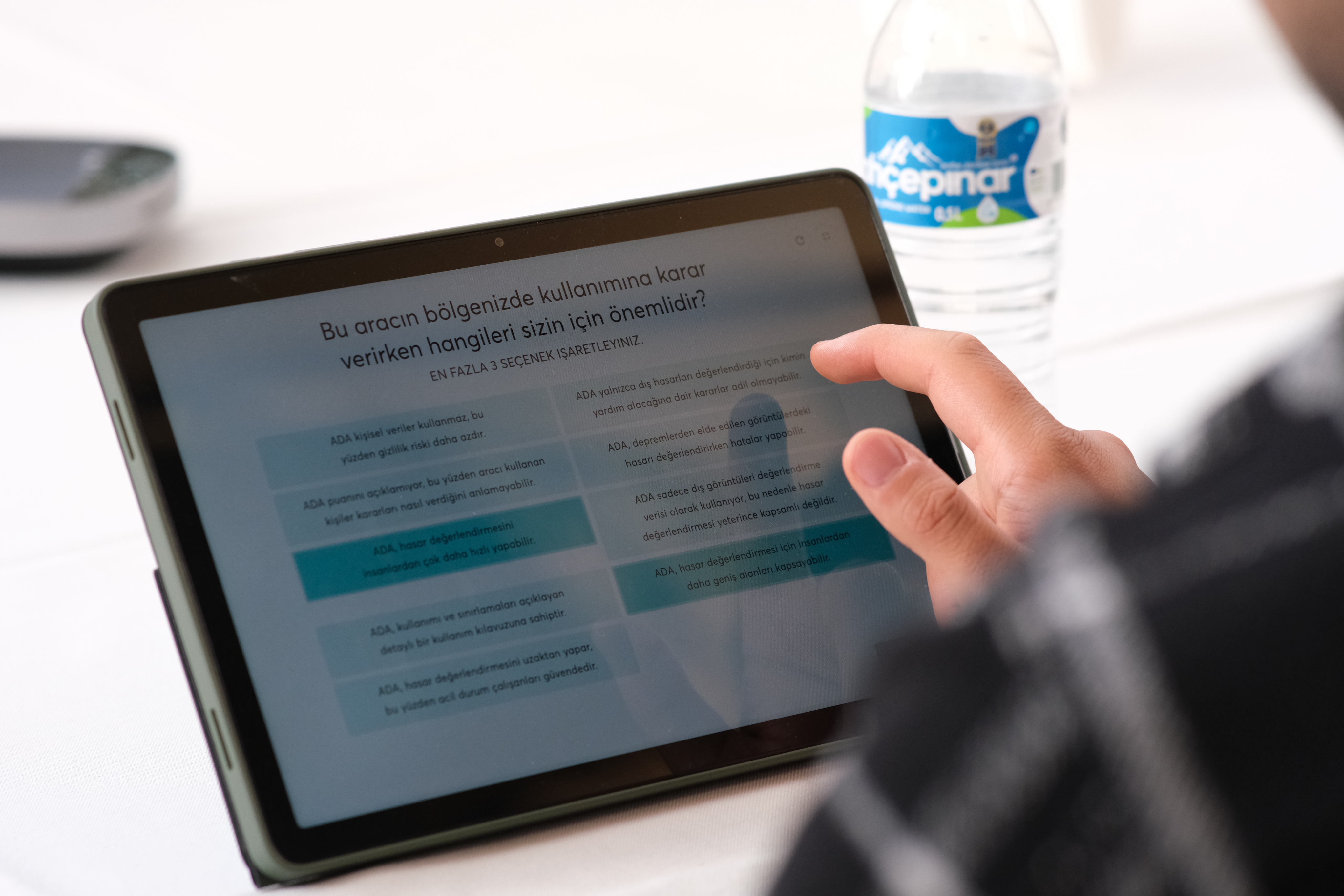
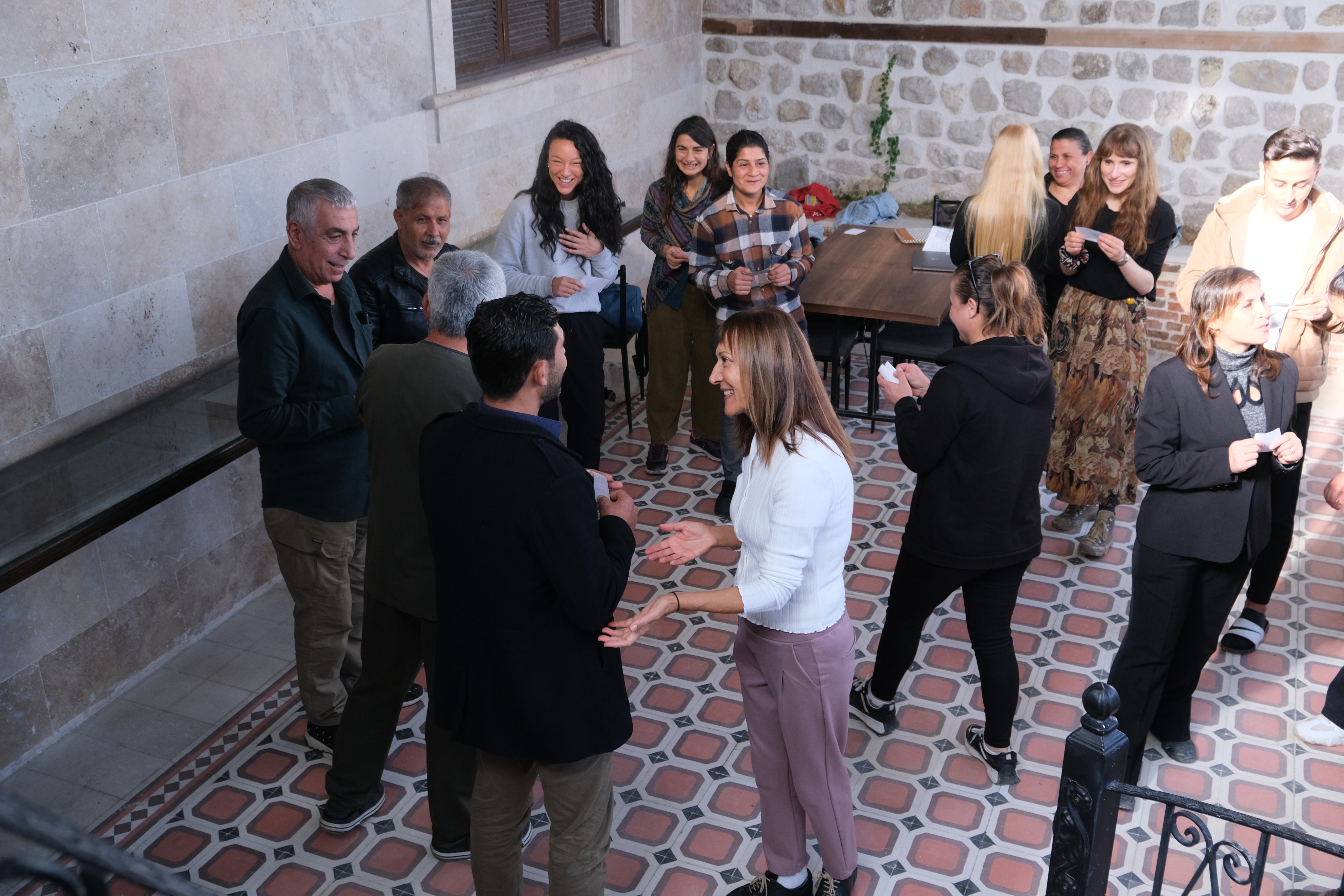
(Top) 12 earthquake survivors participate in a deliberative workshop. (Bottom-left) Shots of the product I designed to deliver the workshop (all materials translated into Turkish). (Bottom-right) A warmup activity at the beginning of the session.
Participant feedback
(Translated from Turkish) “I am only educated to primary school level, and as this kind of ordinary person I've never had the chance to learn what AI is. And now after this workshop I understand it, and I know how to explain it to others."
Project wrap-up video 🎉 FYI I did not make this video! However I was involved in creating the art direction, and then signing off the script, storyboards, and final output.
Next Case Study

Promoting Ethical AI in Earthquake Response
Crisis-affected communities want a say in how AI is used by humanitarians.
Read the full writeup
As Product Design Lead, I worked with both humanitarians and earthquake survivors to explore a new concept of AI assurance. A concept that brings community voices into the design of AI tools being used in crisis response, as well as equipping humanitarians with the tools they need to use AI responsibly in the field.
Artificial intelligence holds massive potential for the humanitarian sector, but due to the sensitive nature of the work, also comes with great risk if things go wrong.
All the humanitarians we spoke to agreed that practical guidance was desperately needed, and also that getting the input from communities on the ground was a crucial part of getting AI implementation right in the sector.
my role
Product Design Lead at Nesta:
I was the sole designer on this project covering:
- User research
- Workshop facilitation
- Product design
- Prototyping
- Service design

1.
3.
2.
Research & testing activities
Concept Research:
I spoke to 32 participants from humanitarian organisations, donors, and tech companies through 1:1 interviews, focus groups, and participatory workshops. I used low-fidelity prototypes and a semi-structured discussion guide to assess desirability, feasibility, and viability of the idea.
Experience Testing with earthquake survivors:
I designed 2 deliberative workshops with 24 local residents of Antakya, Türkiye (12 per session) which was delivered through a local facilitator in the local language. I used deliberative polling as the main research method, along with expert Q&A, and interactive media to gather feedback on their views on AI in earthquake response.
Concept Testing with humanitarians:
Along with the Principle Researcher I ran an interactive design workshop in Antalya, Türkiye to develop the concept further. It was challenging as it had to be in multiple languages, but we managed to gather practical feedback from 54 participants from all over the globe.


Concept Testing with humanitarians
(Top-left) Me facilitating the design workshop with humanitarian staff. (Top-right) The design canvas I used as one of the session materials to stimulate thinking. (Bottom-left) Me 👋 explaining the instructions at the beginning of the workshop. (Bottom-right) A group picture with the 54 participants of the design workshop.
Experience Testing with earthquake survivors
(Top) 12 earthquake survivors participate in a deliberative workshop. (Bottom-left) Shots of the product I designed to deliver the workshop (all materials translated into Turkish). (Bottom-right) A warmup activity at the beginning of the session.
Participant feedback
(Translated from Turkish) “I am only educated to primary school level, and as this kind of ordinary person I've never had the chance to learn what AI is. And now after this workshop I understand it, and I know how to explain it to others."
Project wrap-up video 🎉 FYI I did not make this video! However I was involved in creating the art direction, and then signing off the script, storyboards, and final output.
Next Case Study