
Zeitgeist
Zeitgeist is a digital public engagement tool, designed to give the public a voice into how complex societal issues are handled.
The way that many governments and public institutions engage with the public is broken, and public trust in those institutions is falling across the board. But Nesta’s research showed that the public want to be involved, and that institutions need to engage them to build up trust again. So we launched Zeitgeist. A flexible digital tool that combines the richness of small group conversation, with the scale & measurability of quantitative methods.
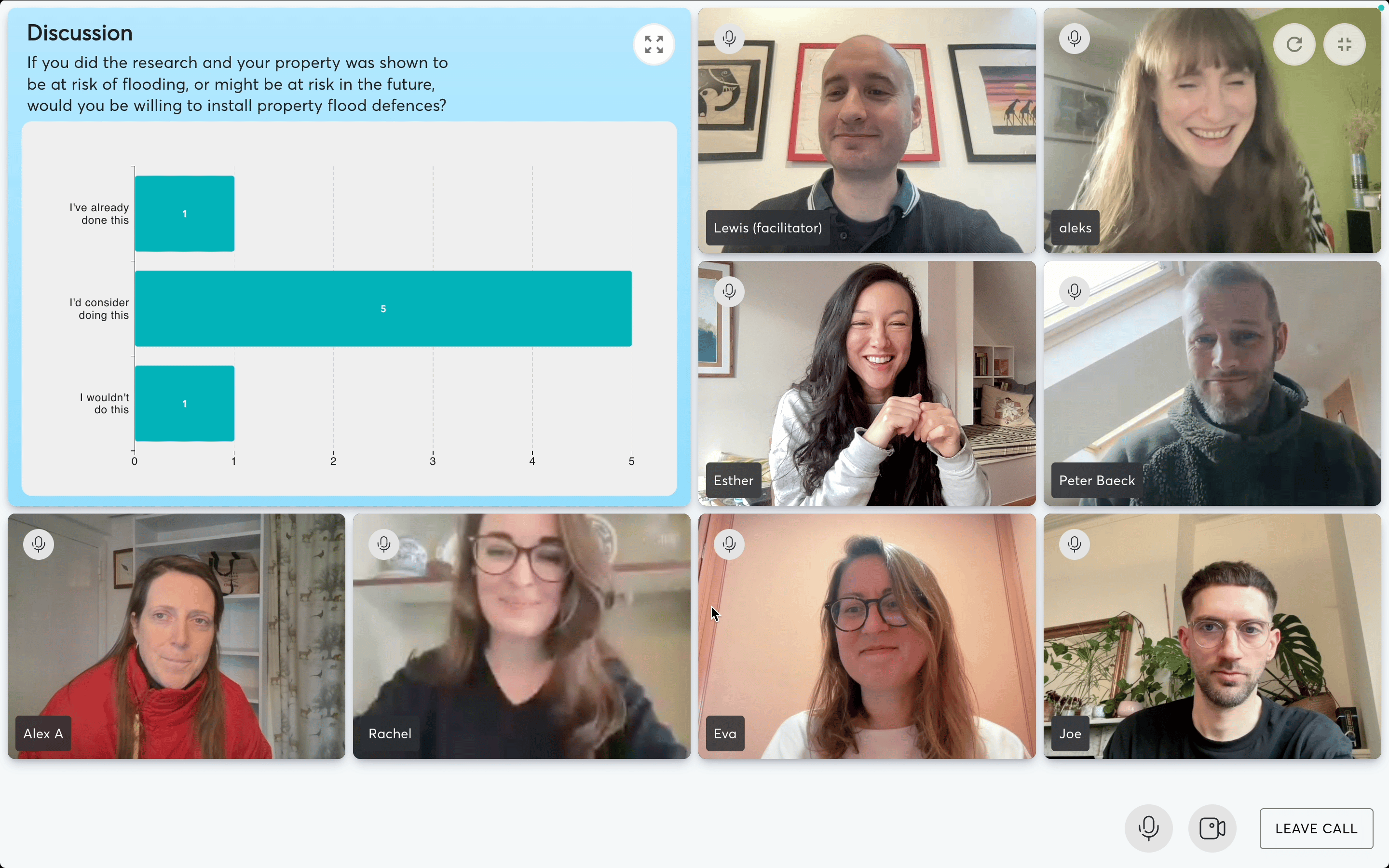
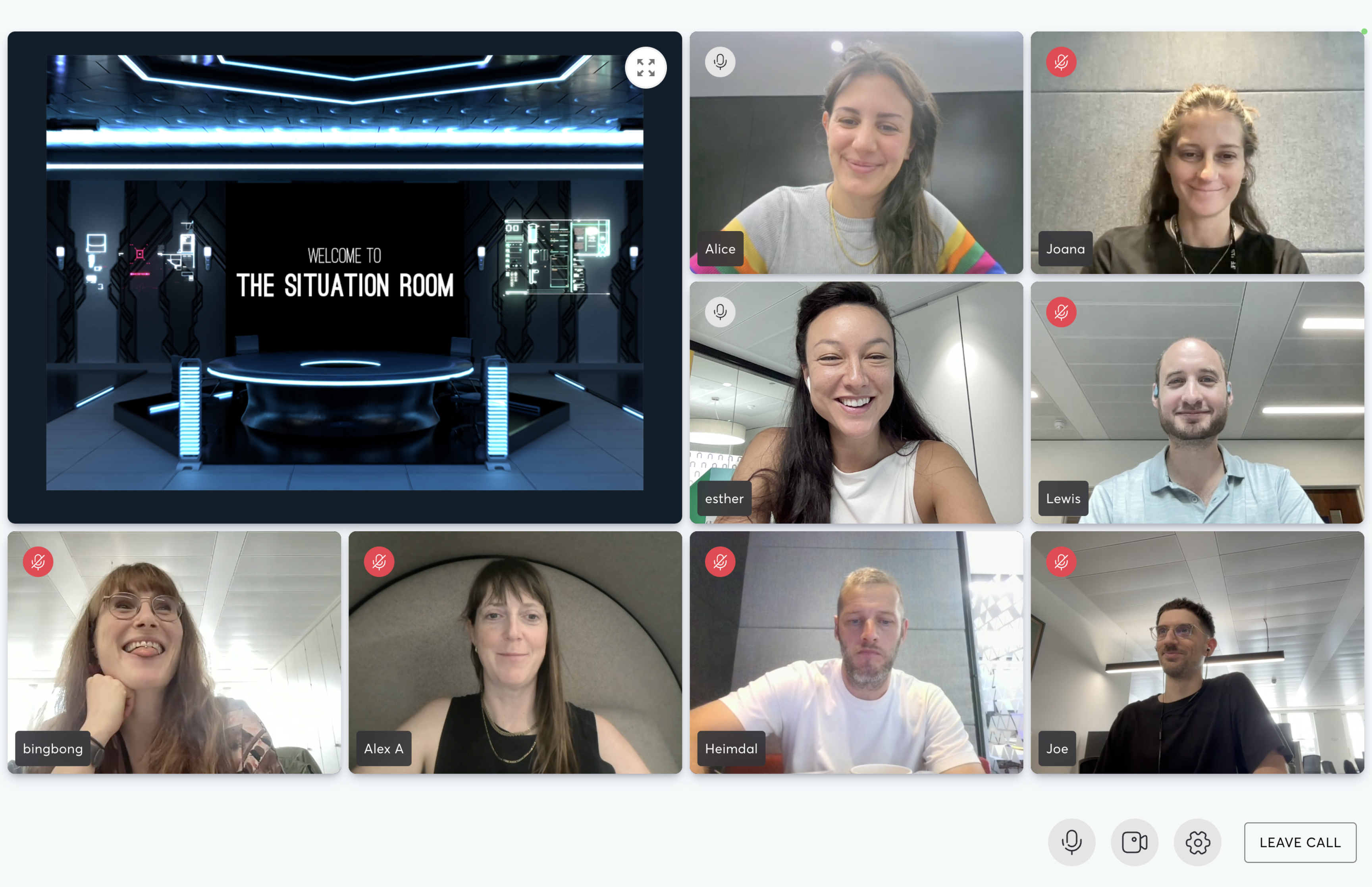
How does Zeitgeist work? Small groups of the public (8 - 12 people) are brought together to discuss a topic. The experience is facilitated by a trained facilitator who leads the group through the experience. Zeitgeist has the capabilities for both in-person and remote interactions.
Zeitgeist enables the whole experience by housing everything in one place - the educational video content, a suite of deliberative polling questions, the real-time results of the polls, and the aggregation of all the results.
my role
Product Design Lead at Nesta:
Sole designer commissioned with designing and launching the team’s first in-house digital product.
Working with one software developer, we went from zero to MVP launch within 4 months.
did it work?
At the end of each workshop we ask the participants a selection of survey questions to gauge enjoyment and performance. These results show the average ratings given from participants across the 4 month launch period.
Average participant enjoyment score: 9 out of 10
Average sign up rate for similar activities: 83%
Participants feeling more informed on the topic: 4 out of 5
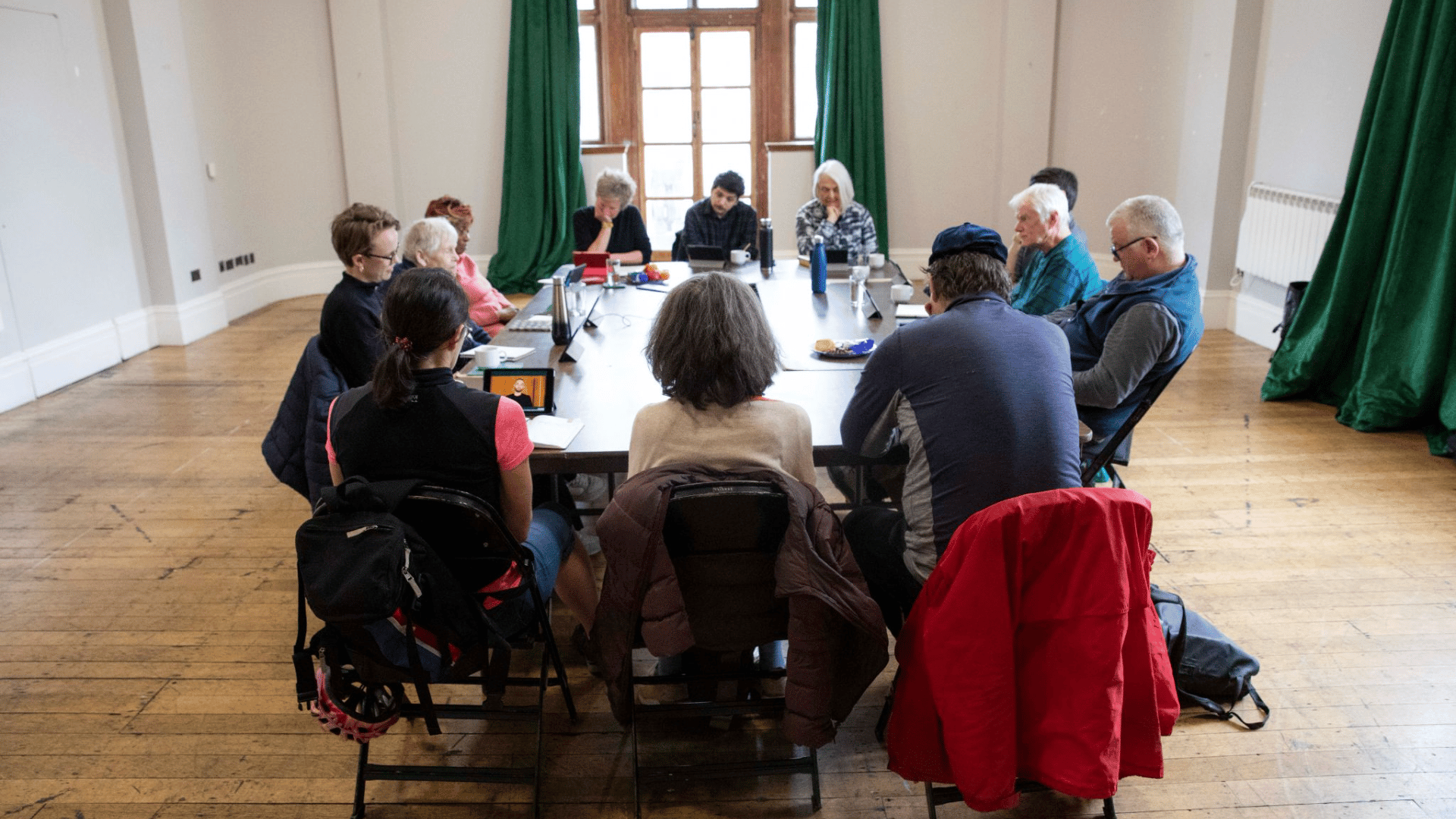
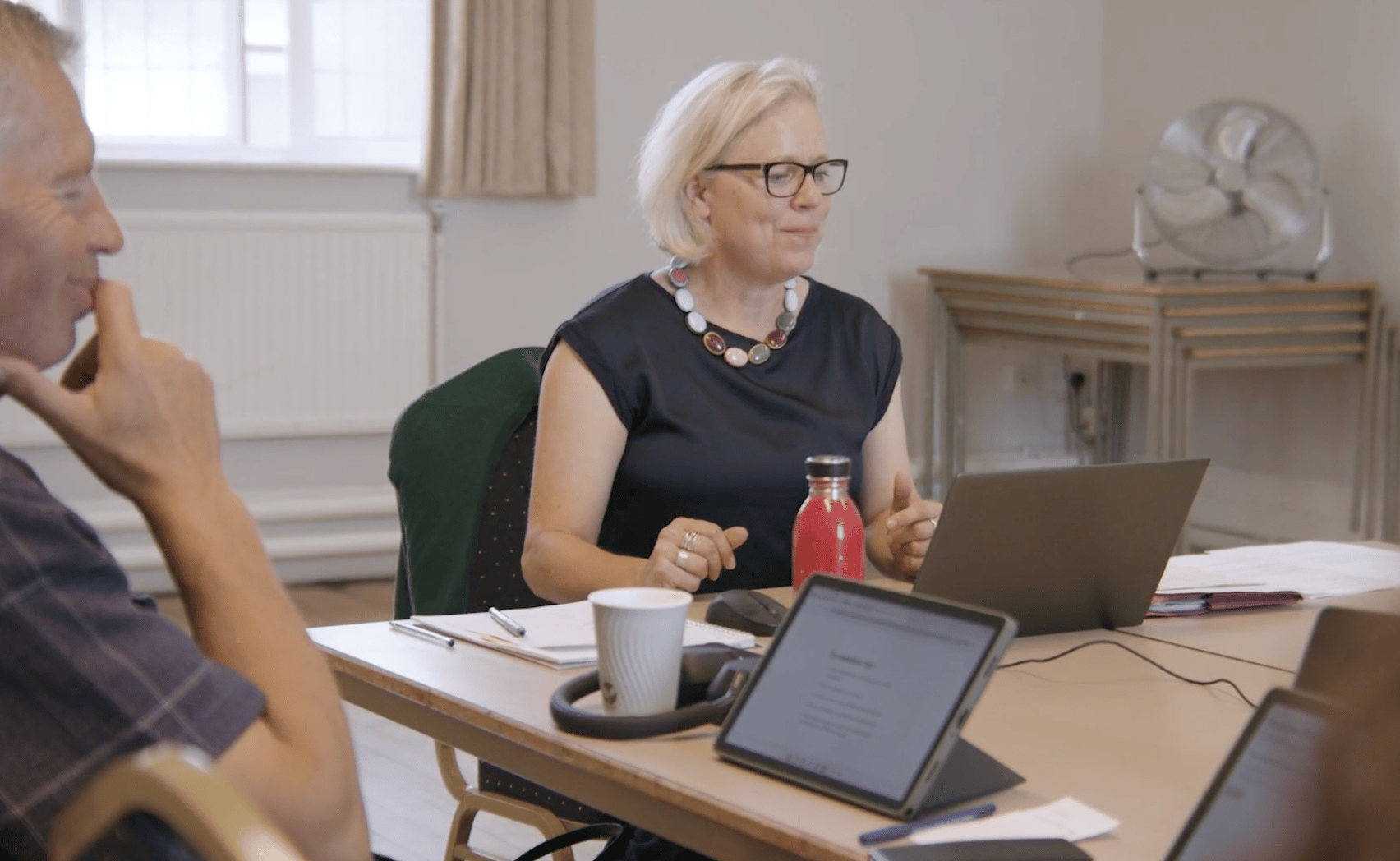
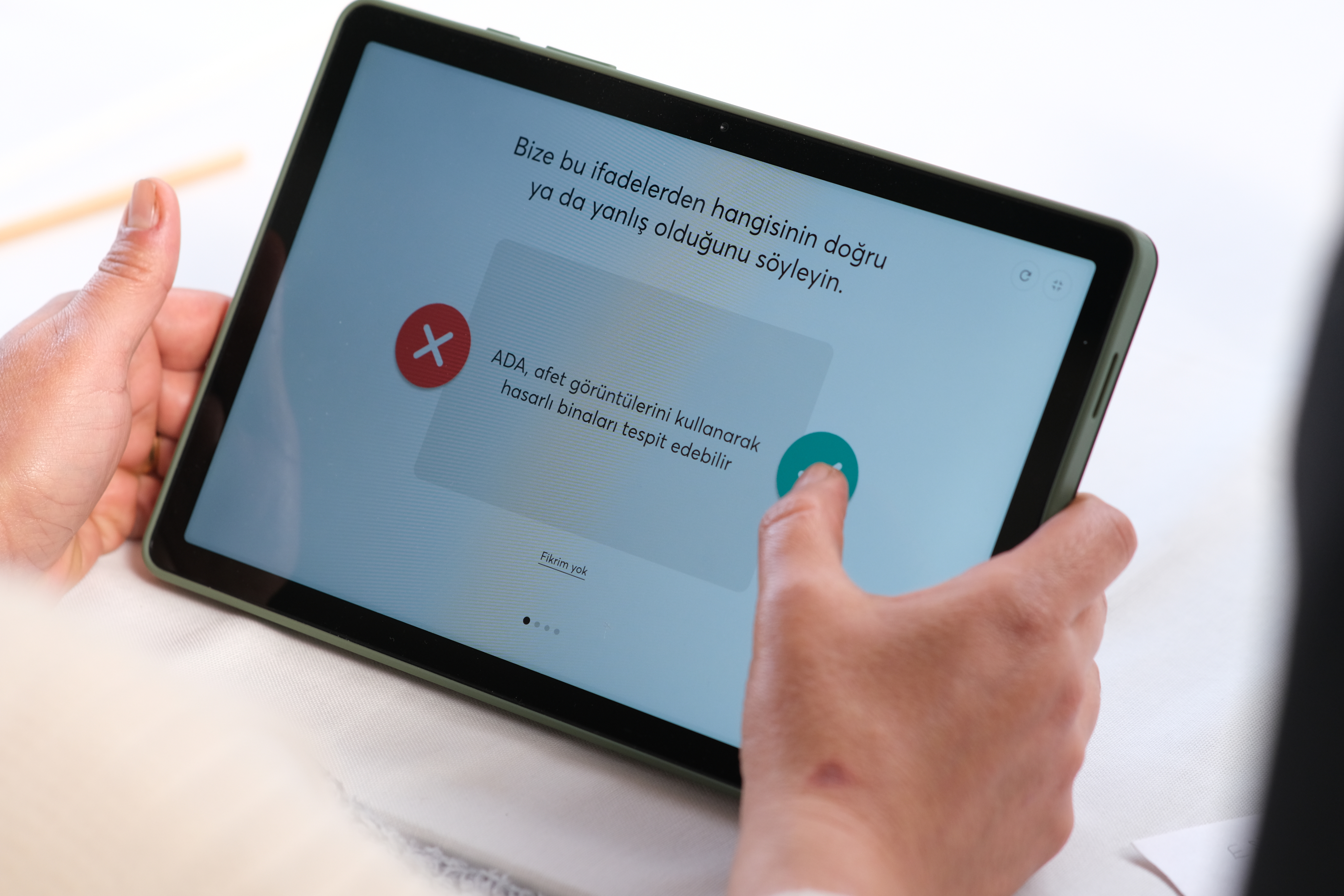
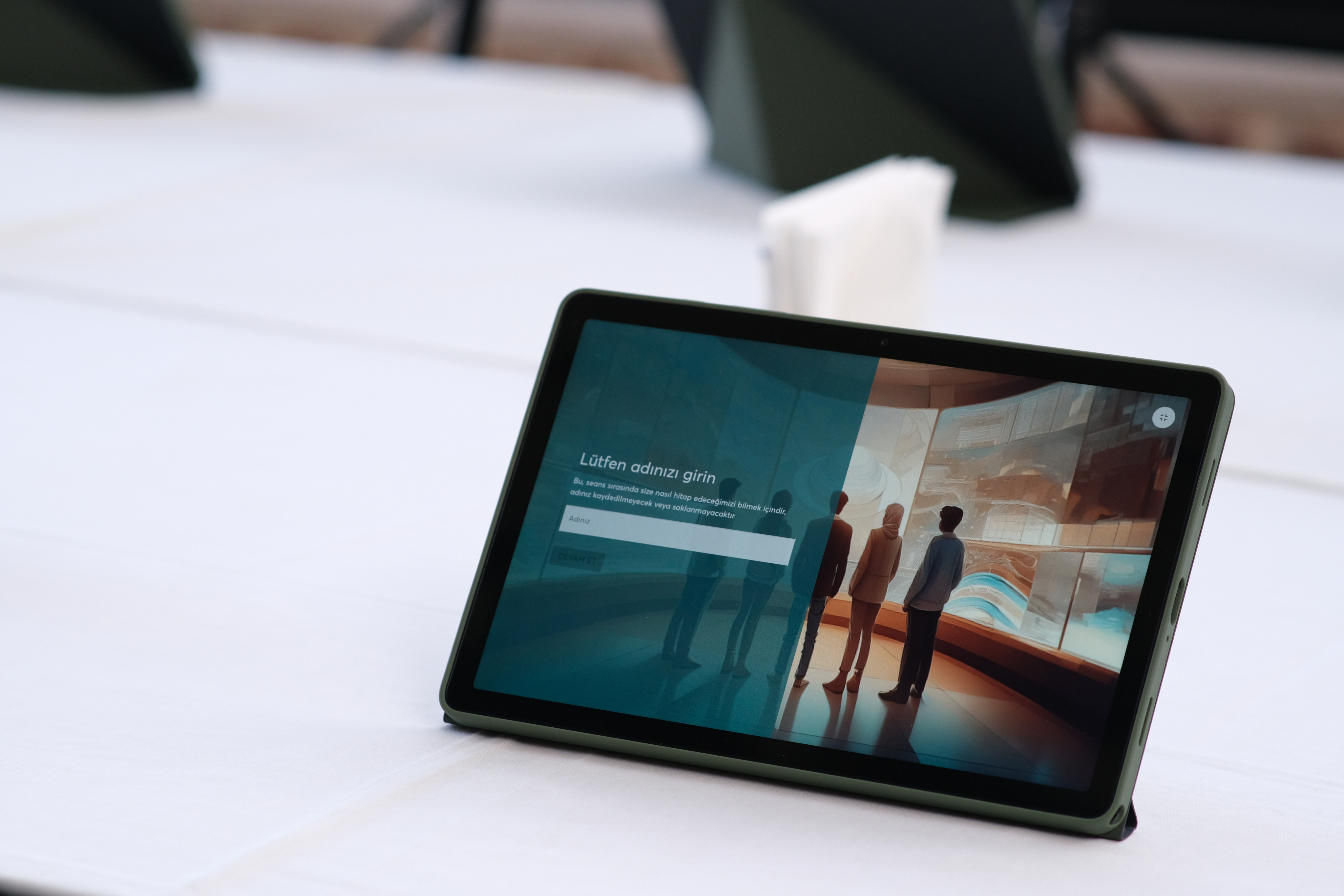
(Top) Participants of an in-person session watch a video using Zeitgeist. (Bottom-left) A facilitator runs the experience & discussion. (Bottom-middle) A participant answers a question as part of deliberative poll, the language here is Turkish. (Bottom-right) The beginning of the participant experience where they enter their name, the language here is Turkish.
The Challenge - I joined a small team who were in the process of pivoting from a research team, to a product delivery team. They were experts in the market, and they knew there was a need & business case for a digital tool like Zeitgeist, but they had never built a digital product before, and had never worked in a user-centred design way. My task (challenge) was to work as the sole designer alongside the sole developer, to launch a working, sellable MVP within 4 months...
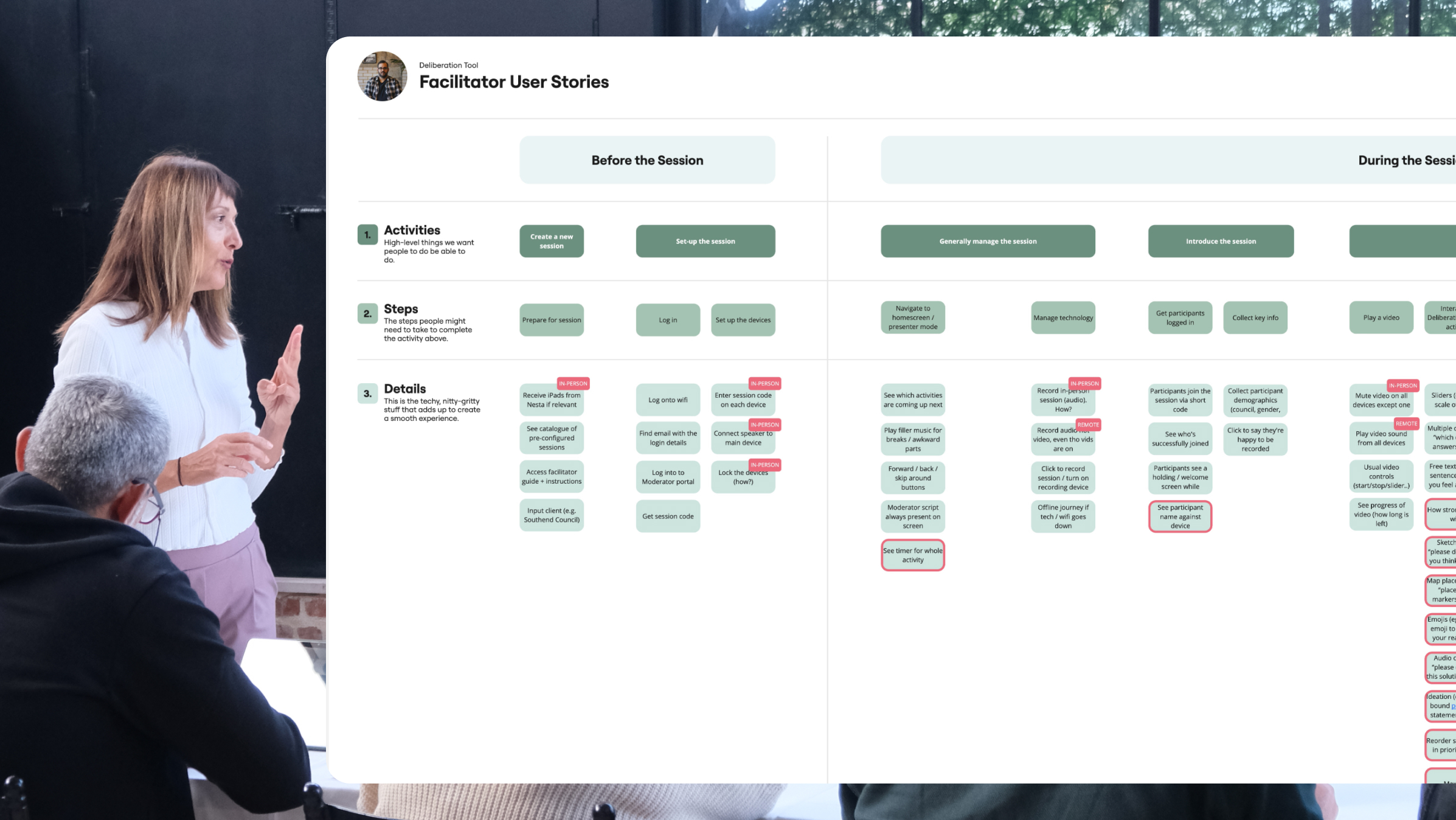
How I got started... I started by getting to grips with the user needs by building out a map of all the key user stories across the target personas (see image above), but the timeline was tight so I had to cut some corners. The researchers had been working with citizens on deliberative experiences like this for years, so although it’s not best practice (I know!), I used the researchers as sudo-users here. However the facilitator & client personas were completely unknown so I focussed my efforts there and used a series of workshops to collate the user needs and to do some collaborative wireframing.
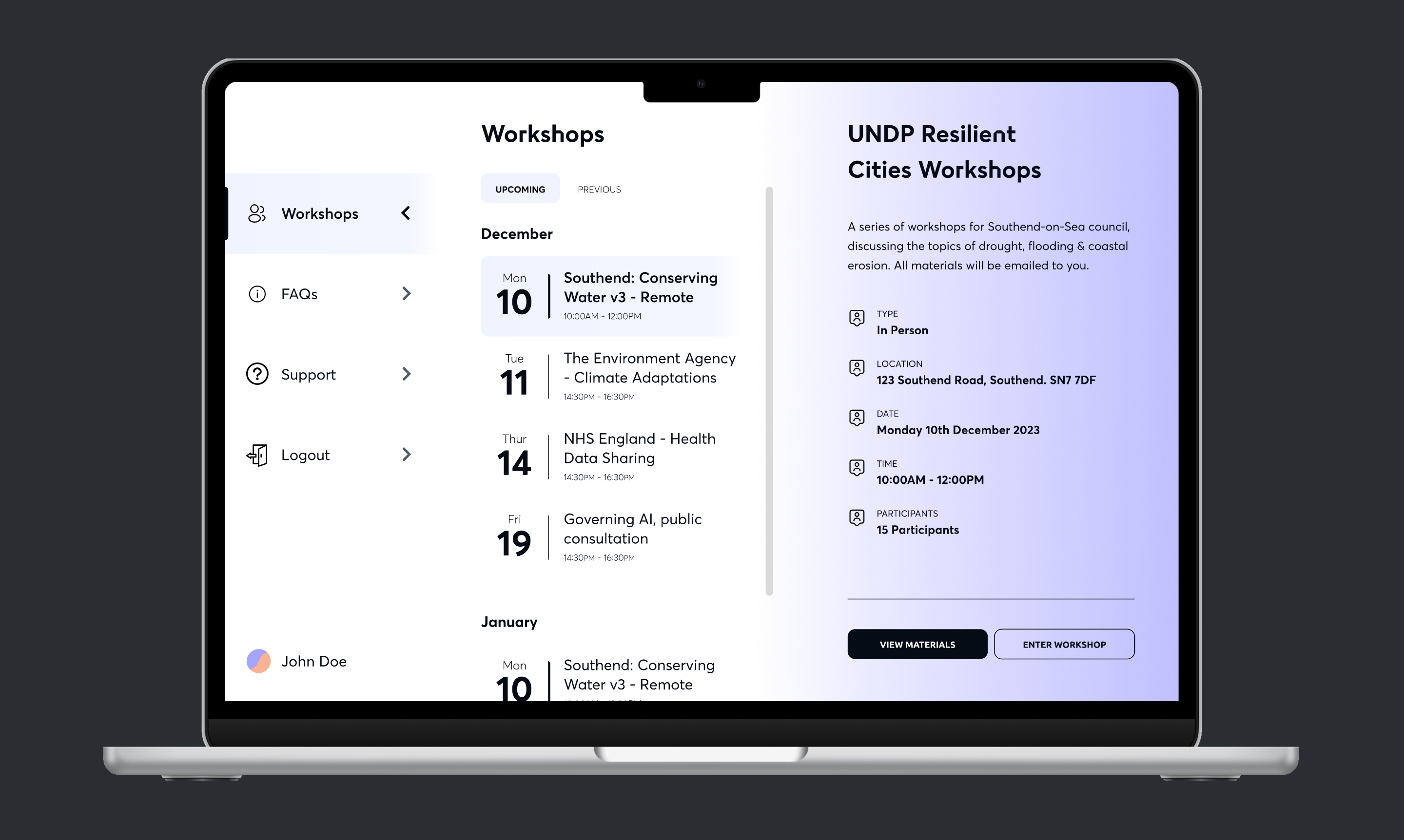
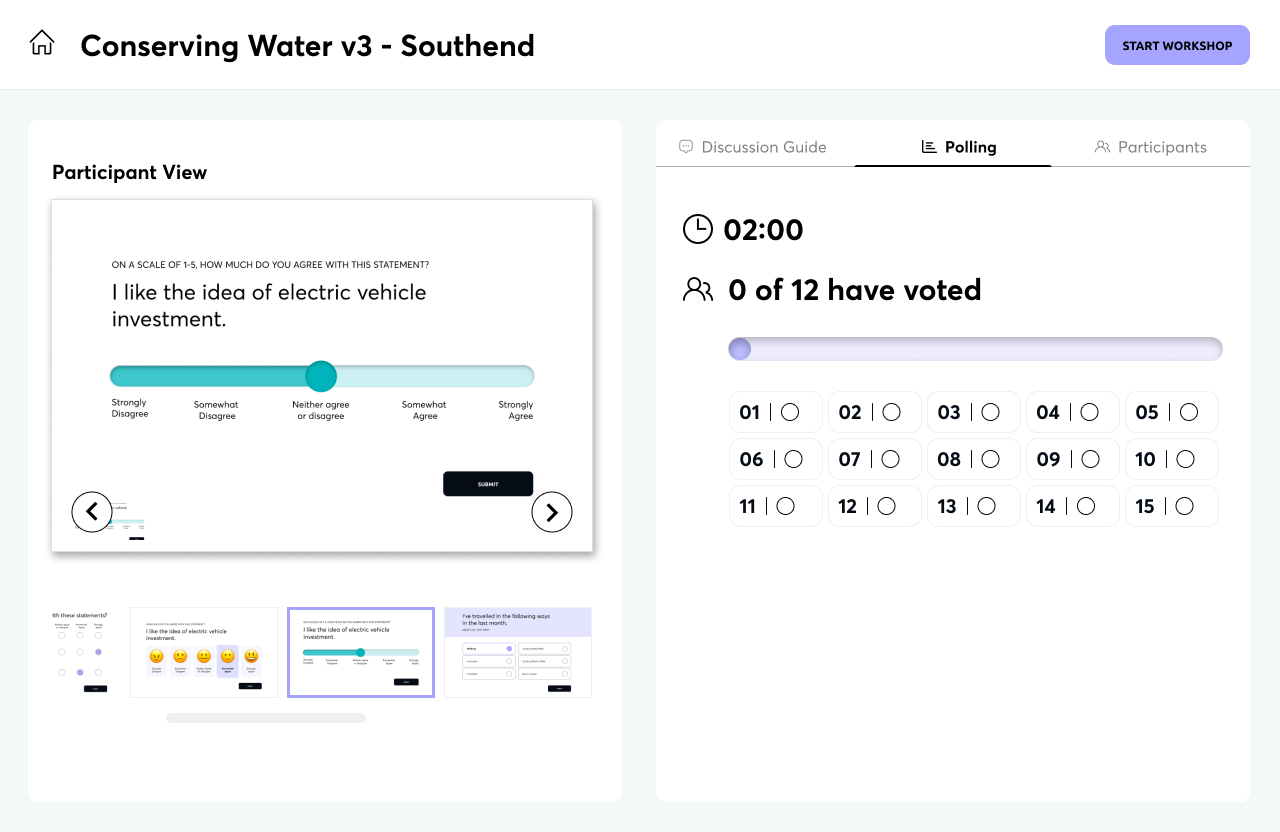
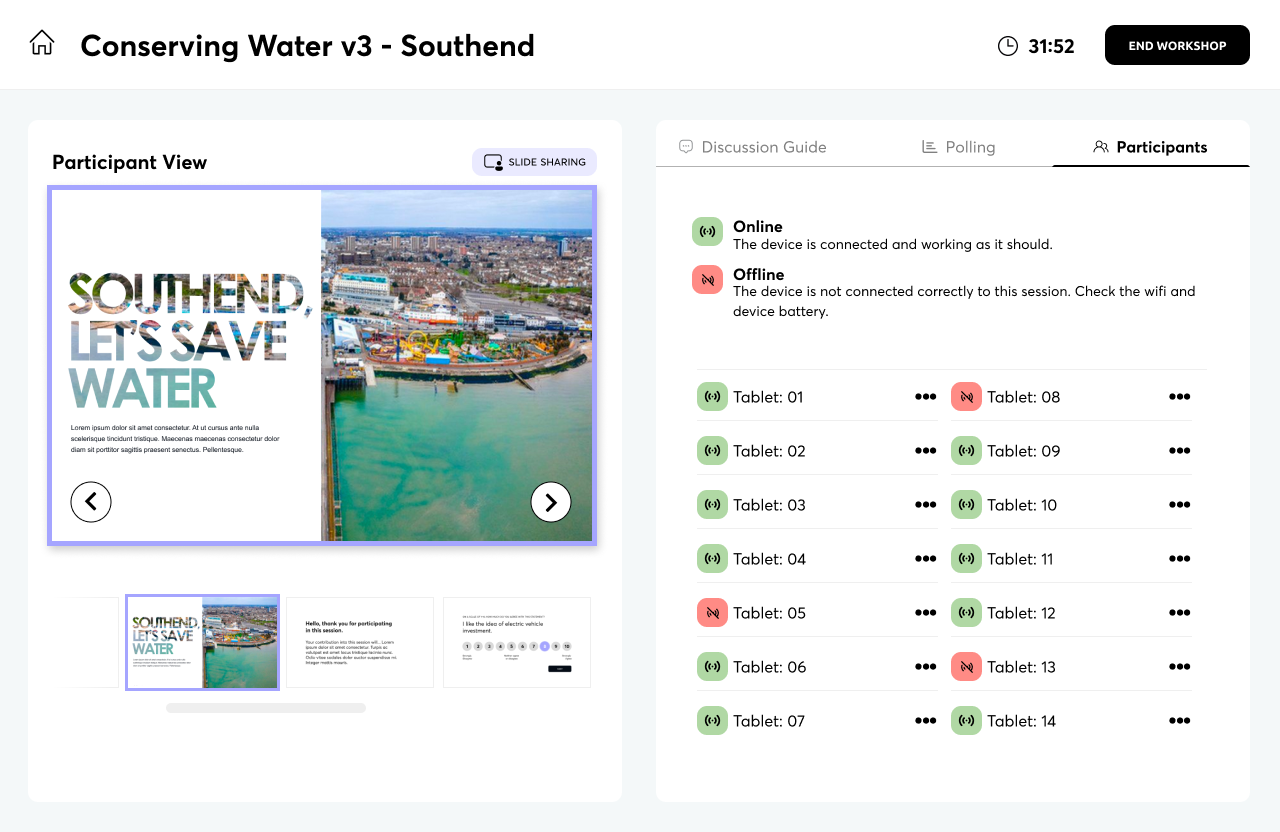
The MVP version of the Zeitgeist facilitator portal that we launched with.
Now being clear on the user needs I started to create the first designs using iterative design thinking. The facilitator portal was the most complex so I started there. Using the usual UCD methodology, I started with sketches and went through a process of fast iteration through testing with experienced facilitators who are used to running sessions like these. Moving from low fidelity sketches, to modular wireframes, and eventually through to hi-fidelity prototypes.
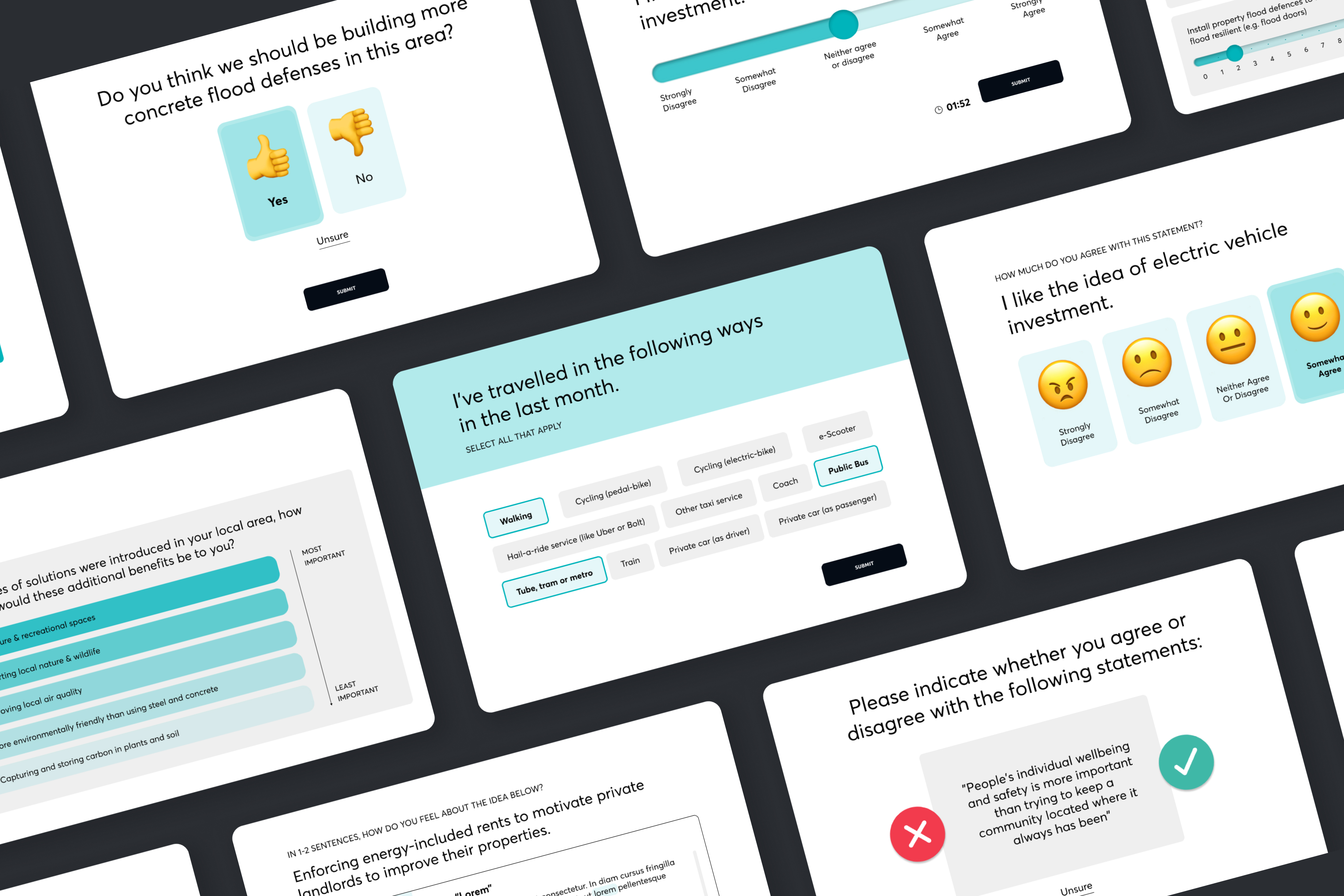
Working with the researchers & data scientists: Next up was to design the suite of deliberative polls. In terms of the UX & visual design it was simple. But The challenge was around ensuring the designs enabled accurate data entry by the participants to ensure unbiased results and accurate data capture.
The world of data visualisation: A key feature that had come up through my user research was the need to see polling results in real time, to allow participants to discuss the group results. This meant that for every polling type there had to be a way of visualising the results. This was a challenge because it was key that the experience remain accessible and easy-to-understand for everyone, however the data scientists wanted to show complex graphs & tables… I surmounted this by talking down the data scientists to the bare bones of the outputs, and testing the visualisations with testers who had no expertise in this area.
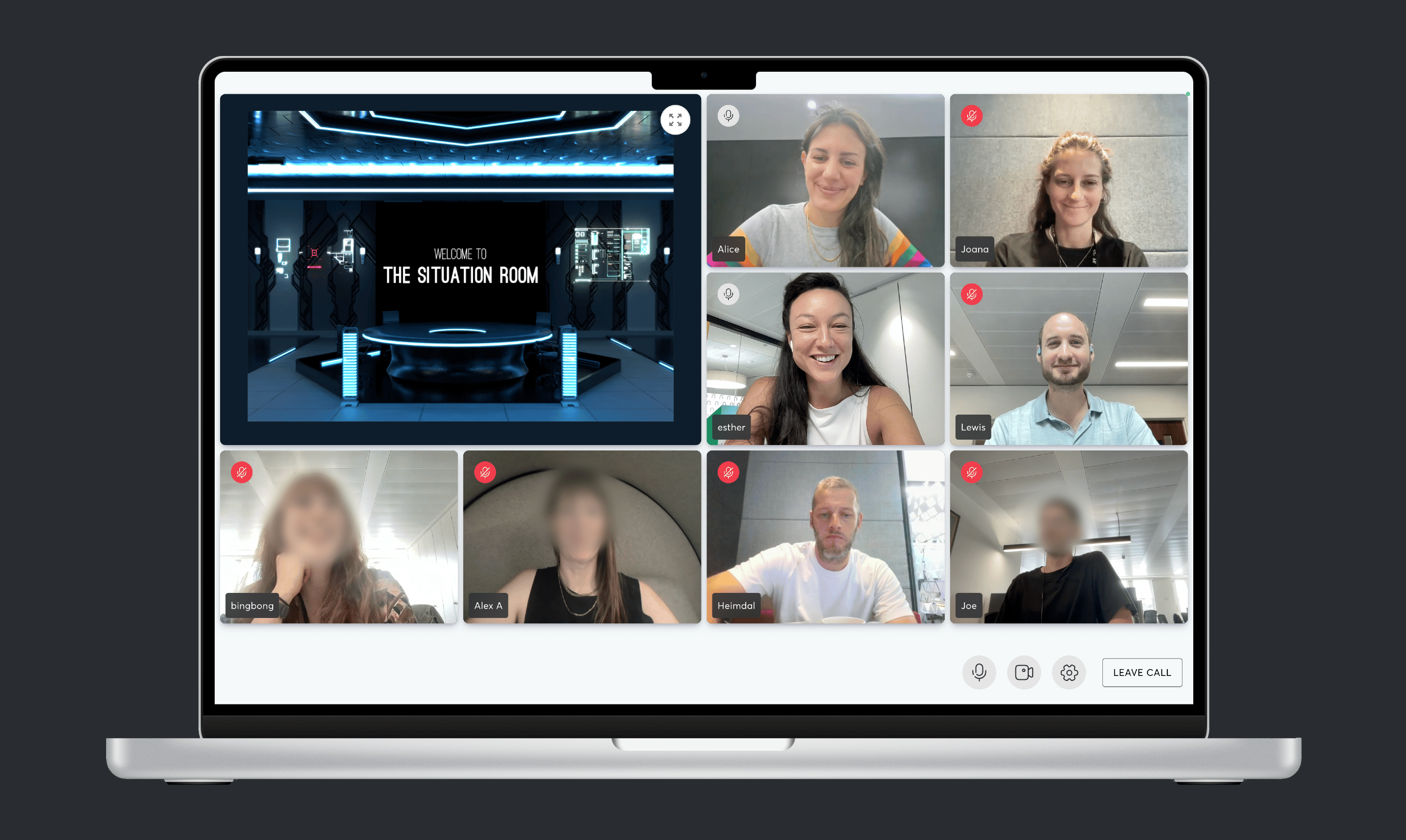
The biggest challenge was building the remote functionality. This was without a doubt the biggest challenge. We had to launch a working video call service with all the core functions within only a few months. I have a process for prioritisation that I use in scenarios like these: ...
An example of the video content that Zeitgeist houses, allowing participants to view learn about the topic more easily, and to create a more enjoyable experience.
Next Case Study

Zeitgeist
Zeitgeist is a digital public engagement tool, designed to give the public a voice into how complex societal issues are handled.
The way that many governments and public institutions engage with the public is broken, and public trust in those institutions is falling across the board. But Nesta’s research showed that the public want to be involved, and that institutions need to engage them to build up trust again. So we launched Zeitgeist. A flexible digital tool that combines the richness of small group conversation, with the scale & measurability of quantitative methods.
How does Zeitgeist work? Small groups of the public (8 - 12 people) are brought together to discuss a topic. The experience is facilitated by a trained facilitator who leads the group through the experience. Zeitgeist has the capabilities for both in-person and remote interactions.
Zeitgeist enables the whole experience by housing everything in one place - the educational video content, a suite of deliberative polling questions, the real-time results of the polls, and the aggregation of all the results.
my role
Product Design Lead at Nesta:
Sole designer commissioned with designing and launching the team’s first in-house digital product.
Working with one software developer, we went from zero to MVP launch within 4 months.
did it work?
At the end of each workshop we ask the participants a selection of survey questions to gauge enjoyment and performance. These results show the average ratings given from participants across the 4 month launch period.
Average participant enjoyment score: 9 out of 10
Average sign up rate for similar activities: 83%
Participants feeling more informed on the topic: 4 out of 5
(Top) Participants of an in-person session watch a video using Zeitgeist. (Bottom-left) A facilitator runs the experience & discussion. (Bottom-middle) A participant answers a question as part of deliberative poll, the language here is Turkish. (Bottom-right) The beginning of the participant experience where they enter their name, the language here is Turkish.
The Challenge - I joined a small team who were in the process of pivoting from a research team, to a product delivery team. They were experts in the market, and they knew there was a need & business case for a digital tool like Zeitgeist, but they had never built a digital product before, and had never worked in a user-centred design way. My task (challenge) was to work as the sole designer alongside the sole developer, to launch a working, sellable MVP within 4 months...
How I got started... I started by getting to grips with the user needs by building out a map of all the key user stories across the target personas (see image above), but the timeline was tight so I had to cut some corners. The researchers had been working with citizens on deliberative experiences like this for years, so although it’s not best practice (I know!), I used the researchers as sudo-users here. However the facilitator & client personas were completely unknown so I focussed my efforts there and used a series of workshops to collate the user needs and to do some collaborative wireframing.
The MVP version of the Zeitgeist facilitator portal that we launched with.
Now being clear on the user needs I started to create the first designs using iterative design thinking. The facilitator portal was the most complex so I started there. Using the usual UCD methodology, I started with sketches and went through a process of fast iteration through testing with experienced facilitators who are used to running sessions like these. Moving from low fidelity sketches, to modular wireframes, and eventually through to hi-fidelity prototypes.
Working with the researchers & data scientists: Next up was to design the suite of deliberative polls. In terms of the UX & visual design it was simple. But The challenge was around ensuring the designs enabled accurate data entry by the participants to ensure unbiased results and accurate data capture.
The world of data visualisation: A key feature that had come up through my user research was the need to see polling results in real time, to allow participants to discuss the group results. This meant that for every polling type there had to be a way of visualising the results. This was a challenge because it was key that the experience remain accessible and easy-to-understand for everyone, however the data scientists wanted to show complex graphs & tables… I surmounted this by talking down the data scientists to the bare bones of the outputs, and testing the visualisations with testers who had no expertise in this area.
The biggest challenge was building the remote functionality. This was without a doubt the biggest challenge. We had to launch a working video call service with all the core functions within only a few months. I have a process for prioritisation that I use in scenarios like these: ...
An example of the video content that Zeitgeist houses, allowing participants to view learn about the topic more easily, and to create a more enjoyable experience.
Next Case Study

Zeitgeist
Zeitgeist is a digital public engagement tool, designed to give the public a voice into how complex societal issues are handled.
The way that many governments and public institutions engage with the public is broken, and public trust in those institutions is falling across the board. But Nesta’s research showed that the public want to be involved, and that institutions need to engage them to build up trust again. So we launched Zeitgeist. A flexible digital tool that combines the richness of small group conversation, with the scale & measurability of quantitative methods.
How does Zeitgeist work? Small groups of the public (8 - 12 people) are brought together to discuss a topic. The experience is facilitated by a trained facilitator who leads the group through the experience. Zeitgeist has the capabilities for both in-person and remote interactions.
Zeitgeist enables the whole experience by housing everything in one place - the educational video content, a suite of deliberative polling questions, the real-time results of the polls, and the aggregation of all the results.
my role
Product Design Lead at Nesta:
Sole designer commissioned with designing and launching the team’s first in-house digital product.
Working with one software developer, we went from zero to MVP launch within 4 months.
did it work?
At the end of each workshop we ask the participants a selection of survey questions to gauge enjoyment and performance. These results show the average ratings given from participants across the 4 month launch period.
Average participant enjoyment score: 9 out of 10
Average sign up rate for similar activities: 83%
Participants feeling more informed on the topic: 4 out of 5
(Top) Participants of an in-person session watch a video using Zeitgeist. (Bottom-left) A facilitator runs the experience & discussion. (Bottom-middle) A participant answers a question as part of deliberative poll, the language here is Turkish. (Bottom-right) The beginning of the participant experience where they enter their name, the language here is Turkish.
The Challenge - I joined a small team who were in the process of pivoting from a research team, to a product delivery team. They were experts in the market, and they knew there was a need & business case for a digital tool like Zeitgeist, but they had never built a digital product before, and had never worked in a user-centred design way. My task (challenge) was to work as the sole designer alongside the sole developer, to launch a working, sellable MVP within 4 months...
How I got started... I started by getting to grips with the user needs by building out a map of all the key user stories across the target personas (see image above), but the timeline was tight so I had to cut some corners. The researchers had been working with citizens on deliberative experiences like this for years, so although it’s not best practice (I know!), I used the researchers as sudo-users here. However the facilitator & client personas were completely unknown so I focussed my efforts there and used a series of workshops to collate the user needs and to do some collaborative wireframing.
The MVP version of the Zeitgeist facilitator portal that we launched with.
Now being clear on the user needs I started to create the first designs using iterative design thinking. The facilitator portal was the most complex so I started there. Using the usual UCD methodology, I started with sketches and went through a process of fast iteration through testing with experienced facilitators who are used to running sessions like these. Moving from low fidelity sketches, to modular wireframes, and eventually through to hi-fidelity prototypes.
Working with the researchers & data scientists: Next up was to design the suite of deliberative polls. In terms of the UX & visual design it was simple. But the challenge was around ensuring the designs enabled accurate data entry by the participants to ensure unbiased results and accurate data capture.
The world of data visualisation: A key feature that had come up through my user research was the need to see polling results in real time, to allow participants to discuss the group results. This meant that for every polling type there had to be a way of visualising the results. This was a challenge because it was key that the experience remain accessible and easy-to-understand for everyone, however the data scientists wanted to show complex graphs & tables… I surmounted this by talking down the data scientists to the bare bones of the outputs, and testing the visualisations with testers who had no expertise in this area.
The biggest challenge was building the remote functionality - a working video call service that also integrated the deliberative polling features. This was without a doubt the biggest challenge, which we surmounted by plugging in existing technology, chosen through a prioritisation matrix of the key user needs to ensure it delivered the must-have functionality.
An example of the video content that Zeitgeist houses, allowing participants to view learn about the topic more easily, and to create a more enjoyable experience.
Next Case Study